This Research Spotlight takes me to Carnaross, an intriguing blend of ancient medieval divisions and boundaries. Situated in the Barony of Upper Kells, Carnaross is a place where history runs deep, from its centuries-old monastic sites to the winding banks of the Blackwater River.
The church has been the heart of the community for generations, and its records are the primary witness to the baptisms and marriages that define a family’s timeline. Equally important are the local graveyards, such as the ancient grounds at Castlekeeran or Dulane cemetery.
Tucked away near the banks of the River Blackwater lies St Ciarán’s Holy Well (Tobar Chiaráin), a site that has served as a spiritual focal point for local families for over a millennium. For generations of Loughan and Dulane parishioners, the well was not just a place of prayer, but a part of community life. Water from one side of the well is said to cure headaches, the other side is said to cure toothaches. The well’s stone-carved basins and tranquil surroundings connect us directly to the medieval world our ancestors walked.
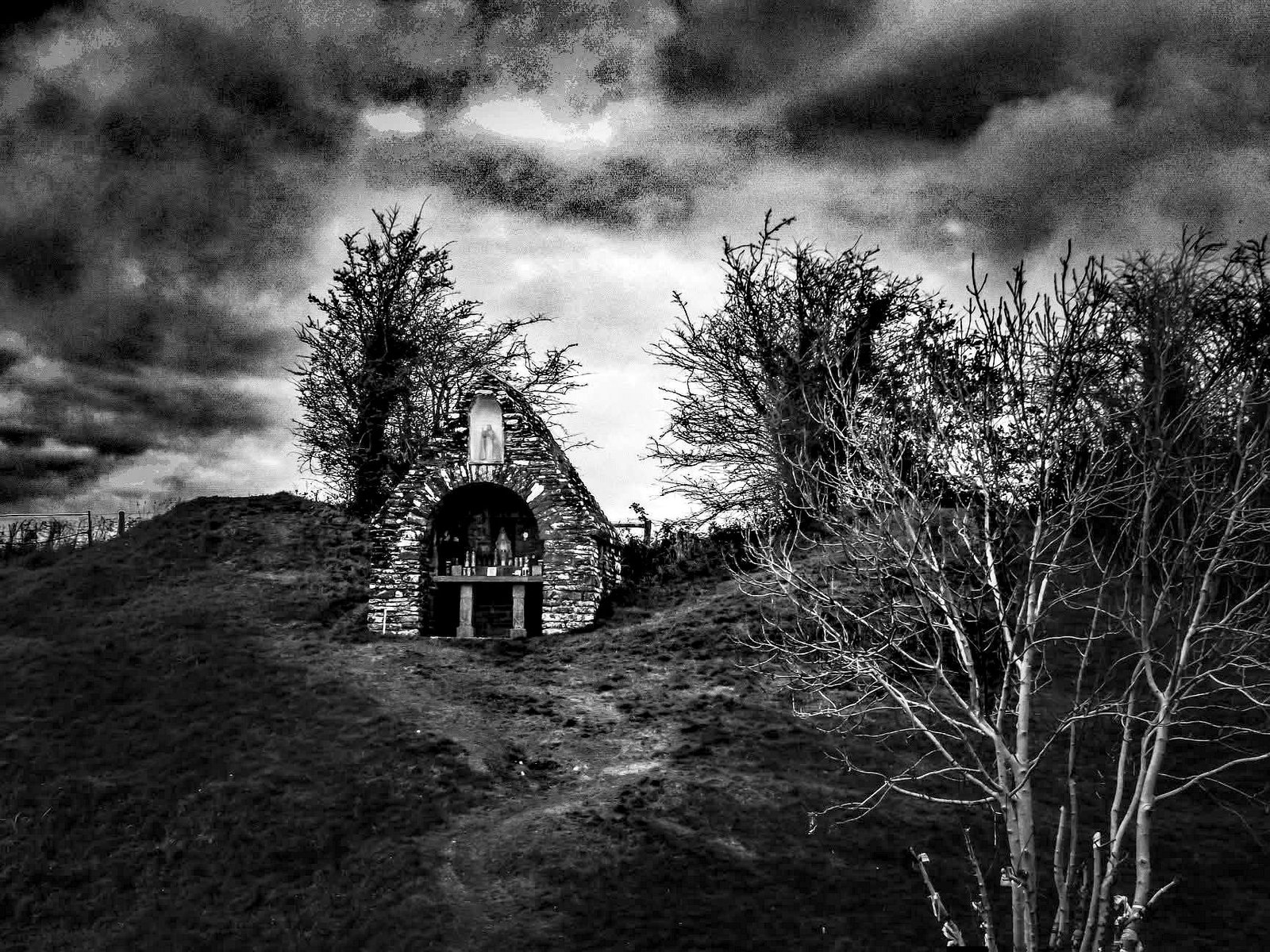
As I navigated the records for this area, I often referred back to old maps, noting the family connections in neighbouring townlands. Carnaross sits in a fascinating intersection of civil (Castlekeeran/Kells) and religious boundaries (Carnaross).
The modern-day name Carnaross is a result of the merging of three ancient medieval territories: Dulane, Loughan, and Castlekeeran. Dulane can be looked at as the ancient foundation of the area. Famous for its unique ‘beehive’ church ruins, this is often the primary name you’ll find on the oldest baptismal registers, as the records date back to the 1700s. Loughan is often the name that appears most frequently in official documents, acting as the primary link between the land and the people. Loughan was the civil title of the area. While Castlekeeran is its own ancient Civil Parish, it is spiritually inseparable from the others. Named after St Ciarán the Pious (of Saighir), who founded a monastery here in the 8th century, Castlekeeran was once a bustling centre of faith and learning. It was technically its own small Civil Parish, though for administrative ease, it was often grouped with Loughan.
Researching the townland of Cornasaus led to the surprising discovery of a 100% turnover of surnames in the 27 years between the Tithe Applotment Books of 1827 and the Griffith Valuation of 1854. This complete transformation of the townland points to a perfect storm of social and economic upheaval in the area at the time, possibly due to the Headfort estate consolidations as well as the Great Famine.
By the turn of the 20th century, the daily lives of many Carnaross families were still linked to the Headfort Estate. As one of the most powerful landlord families in Meath, the Taylors (the Marquises of Headfort) held land across the parishes of Dulane and Loughan. Looking at the years leading up to the 1926 Census, the Headfort influence is everywhere – from the neat stone cottages built for estate workers, to rental agreements found in the Land Commission records. The 4th Marquis was a prominent figure in Meath society c1900, but for the local tenants, the relationship was more practical; the estate was the primary employer and the ultimate authority on the land. Many local families transitioned from being tenants of the Marquis to becoming independent landowners under the various Land Acts of the early 1900s.
During this project, my focus has been centred on several key townlands:
- Castlekeeran
- Dulane
- Cornasaus
- Crossakeel
- Maperath
Every project brings new sets of families. Here are surnames that have surfaced in the records:
- Farrelly
- McGrane
- Dunne
- Barnes
- McInerney/McEnerney
My journey through the records of Carnaross has reminded me that genealogy is more than names and dates – it’s about the landscape, landmarks and boundaries that shaped our ancestors’ lives.
How Can I Help You Move Forward?
Tracing your roots through the winding townlands of Meath can be as challenging as it is rewarding. If you’ve hit a ‘brick wall’ or simply don’t know where to look next, I’m here to help.
- Not sure where to start? I offer a free 20-minute consultation to discuss your research goals and see how we can uncover your family’s story together.
- Need a clear roadmap? My Heritage Strategy Session is designed specifically for those who want professional guidance to jumpstart their own research. We’ll look at your existing data and build a bespoke plan to help you navigate the archives with confidence.
Whether you are looking for a full genealogical search or just an expert set of eyes, let’s see what we can find.
Hi, my Dad, John (Sean) Morris, whi died last year was born near, and lived in Clonagrowney, Carnaross from the 1930s to 1960, when he left to work in England. I’d be interested in knowing more about the family. His mother, the Murtaghs are from just across the border in Cavan.
My GGG grandmother was Jane (Jenny) Yoar and there are 2 Jenny Yoars along with gaps in the Carnaross Parish records. She married Hugh Beggin in 1805 in her church. I have many records and have used researchers aiding my research. I cannot validate her parents names. It has been a challenge but that is part of the hunt. I keep going….. Dave
My grandmother who died when I was 10, was Irish i believe all I really know is first name on death certificate was mabem and surname possibly Russell. She married a scotsman John mathieson. That’s it sum total of my knowledge